Even before I found myself going down the jazz rabbit hole(a hole I’m still dizzily finding myself descending into 15 years later) I knew of Miles Davis’ Bitches Brew. As a teen seeing that album cover by French painter Malti Klarwein perusing Musicland or Super Sounds, it would always make me stop and gawk. The foreign and obscure nature of it made me think that I had so much more to learn in life. It screamed a kind of knowledge that I knew I’d only ever have a chance to understand once I’d grown up a bit(or at least gotten a full time job and had gone through a life crisis or two.)
I knew what jazz was; guys in suits in smokey clubs playing horns, upright basses, and three-piece drum sets while sweating profusely. Tinkling glasses chiming in like drunken angels getting their wings as solos were taken and senses were properly rewired. It was a scene that seemed foreign yet astute; collegiate, intellectual, while also being wily and unpredictable.
But Bitches Brew? That album didn’t look like jazz. It looked more like a fever dream; a dangerous, alien landscape where women ruled and men knelt before their warrior female Gods. Blue skies melted into a psychedelic landscapes as female empowerment coalesced with an LSD chaser. It looked like something I’d like to explore when I was old enough to “get it”. At 14-years old looking for Shotgun Messiah at National Record Mart in the mall, I wasn’t anywhere near “getting it”.
Flash forward to my birthday, 2010. I made the jump into vinyl two years prior, buying myself an Audio Technica AT-PL120 and a small stack of vinyl from Jazz Record Mart in Chicago as my official jump into jazz. I’d bought a couple Thelonious Monk CDs in the 90s – as well as some random Chick Corea CD – but the jazz obsession began once I bought that turntable. For my 37th birthday in 2010 I bought myself Bitches Brew and a pair of noise-cancelling headphones. My parents came over for some cake and I put Bitches Brew on the turntable. My dad sat on the couch, listened for a couple minutes, then said “This sounds like Dirty Harry music.”
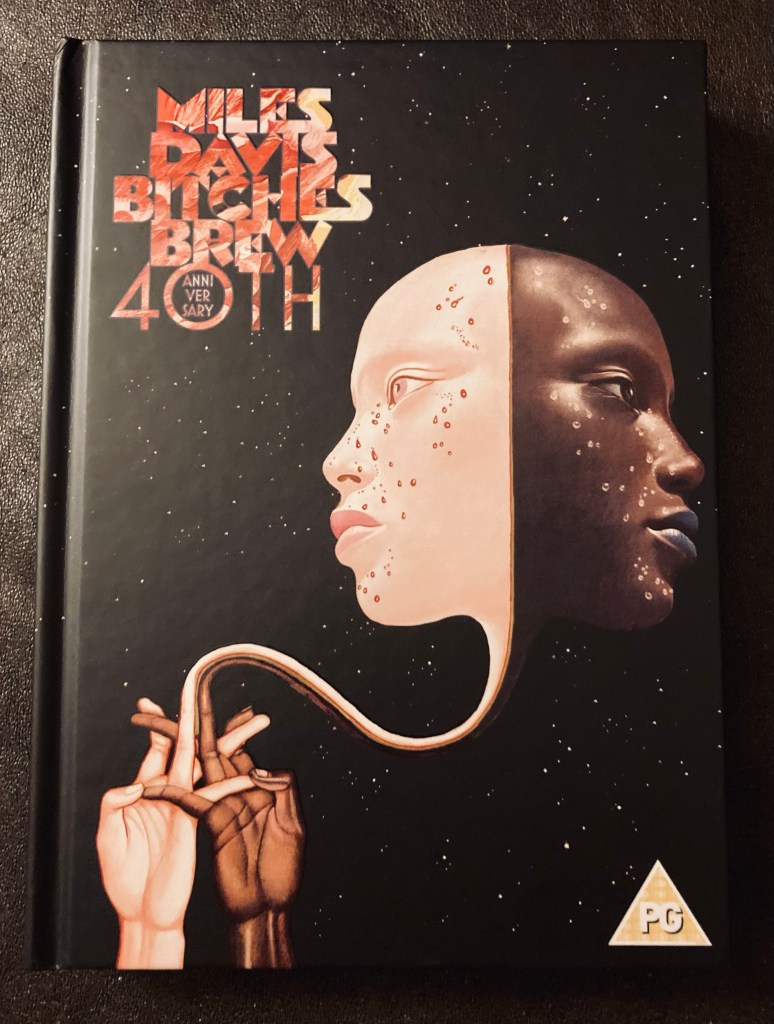
It kind of did. More to the point, it had a Lalo Schifrin vibe. Schifrin was heavy into the jazz scene in the 50s, working with Dizzy Gillespie. He had a frantic, busy vibe to his work and brought a touch of chaos to his music. Miles Davis locked into a similar sort of chaos, but slowed it down a bit. He took his time in these long sound excursions like “Pharaoh’s Dance”, “Spanish Key”, or the title track “Bitches Brew”. They sounded less like jazz compositions and more like hallucinogenic incantations. Voodoo anthems for the counterculture. This was Davis’ answer to 60s psychedelia and the heady world rock and roll was heading into as it swayed and snuck into the 1970s.
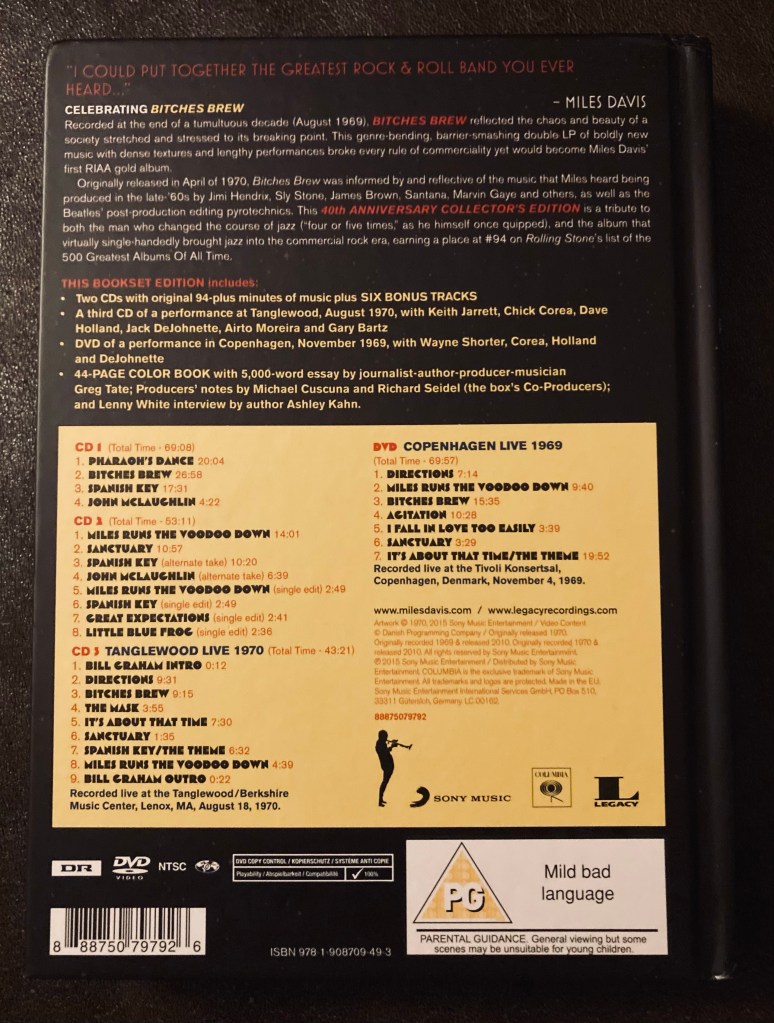
“I could put together the greatest rock and roll band you ever heard.” – Miles Davis
That statement wasn’t hyperbole. It was the truth, top to bottom. I’d often heard about Davis’ fascination with Jimi Hendrix, and how Hendrix was equally fascinated with Davis. I like to think that each possessed what the other wanted to evolve their sound into. Hendrix started to with Band of Gypsies, a more free form approach to what he was doing with the Experience; blues, soul, funk, and what I think Miles Davis was doing with Pete Cosey on Dark Magus.
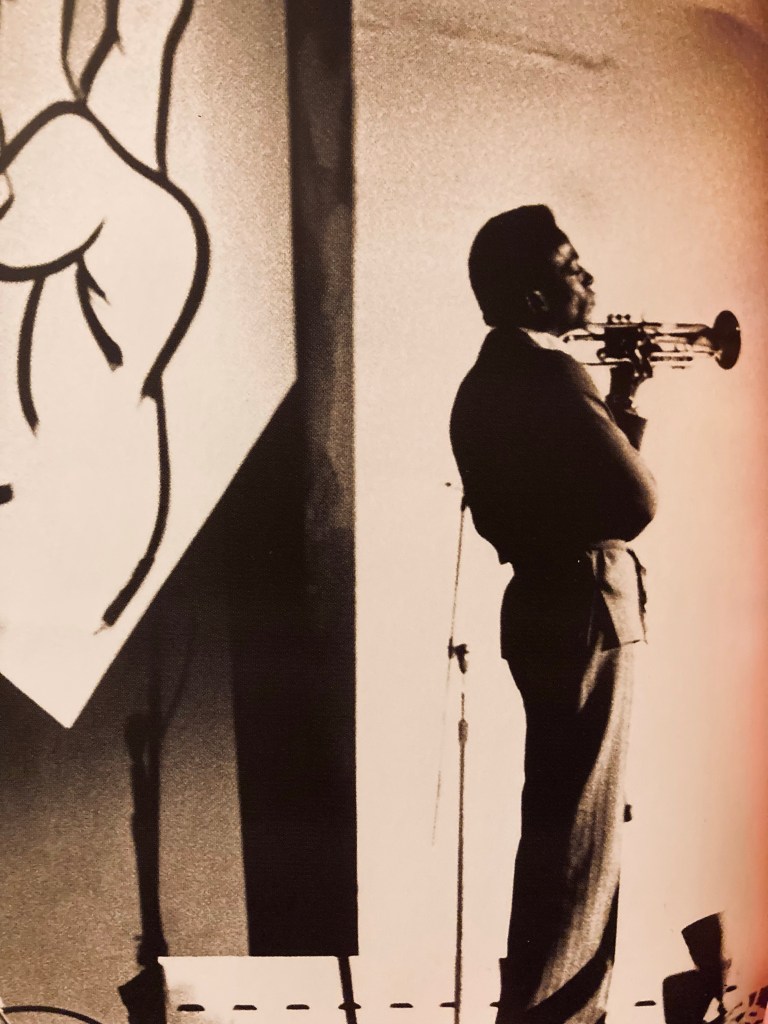
Davis wanted his jazz to go in darker, funkier territory. He was staring out from the gilded circle of studious jazz and seeing what was happening with the counterculture. He wanted that change, noise, and freedom in his musical world. He wanted to combine that rock and roll vibe within his jazz world, and he put together the perfect band for it.
Miles Davis put together an ensemble like no other. Names like Wayne Shorter, Bennie Maupin, Joe Zawinul, Chick Corea, John McLaughlin, and Larry Young were just a few of the towering players he put together for the Bitches Brew sessions. These were players that were seasoned musicians in the jazz world, but were also open minded enough to achieve the sound Miles was looking for. Guys, that whether they knew it or not, were going to help Davis reconfigure what the word jazz could mean.
Having revisited this record time and time again over the last nearly 15 years I’ve come to appreciate the rhythm section so much. Early on it was hard to discern any grooves. Everything felt very chaotic and mysterious. It was the squelching, echo-drenched trumpet that led the charge, while the electric pianos of Zawinul, Corea, and Larry Young(one panned right and the other left) that seemed to stand out.

But with each listen taking you further into the heart of Davis’ musical darkness the low, rumbling groove came closer to the surface. The drumming of Jack DeJohnette, Lenny White, Billy Cobham – as well as the congas of Don Alias and Juma Santos – have become the tribal heartbeat to this record. Throw in the bass of Dave Holland and Harvey Brooks and you’ve got a wall of rhythm and groove.
Of course Bitches Brew would not have been the album it became had it not been for the studio genius of producer Teo Macero. The concept and direction was all Miles Davis, but Macero was the wizard that made Miles’ vision a reality. Taking hours of long jams and editing them into the pieces that have stood the test of time. Cutting and pasting, looping, adding reverb and echo to give the record its singular sound. Not only was Bitches Brew an entirely new direction for jazz, but it was uncharted territory in regards to how you can use the recording studio as an instrument in itself.

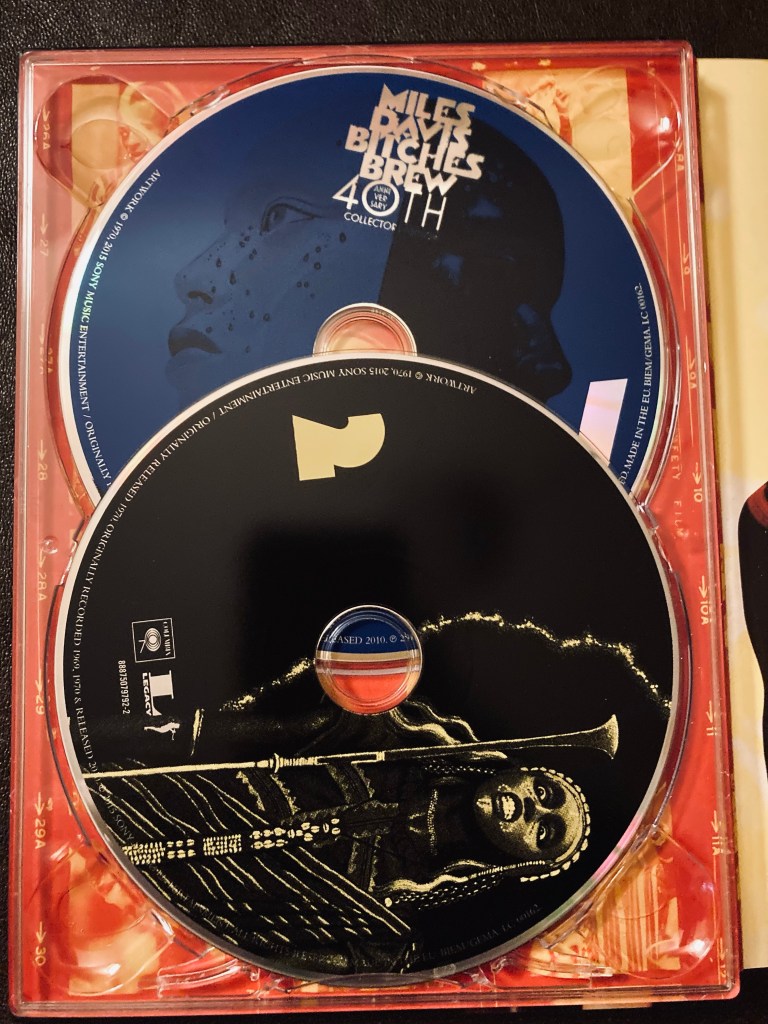
Back in the summer I bought the 40th Anniversary 3CD set of Bitches Brew. It contains the original album over 2 CDs, remastered. It also contains one CD of the album recorded live at the Tanglewood/Berkshire Music Center on August 18th, 1970(my dad’s 24th birthday). Plus, a live DVD of Miles live in Copenhagen, 1969. It’s a monumental listen, and one I’ve been spinning pretty much nonstop for the past couple of weeks. I also found a decent used copy of The Complete Bitches Brew Sessions from 1998. It’s been out of print for a long time, so I was pretty excited to find a copy that wasn’t going to break the bank.
Bitches Brew wasn’t rock and roll. Bitches Brew transcended rock and roll and became something all together new, and far more dangerous than rock and roll ever was or ever could be. It took years for it to really sink in for me. I had to listen to it over and over and over before it opened its doors and allowed me in to see its inner workings. It’s a lot like playing some long, epic video game that only play and exploration would pay off in opening new levels. Bitches Brew is the ultimate RPG; a life-long adventure that you never truly want to “figure out”, but maybe get close to the edge so you can appreciate the work. With time, Miles Davis’ Bitches Brew transcends and evolves.
Even now, each listen seems to open yet another portal. It’s a journey I’m happy to take, and one that reveals new layers every time I hit play.
Discover more from Complex Distractions
Subscribe to get the latest posts sent to your email.


I tried Bitches Brew when I was in high school – we had a copy at the public library where I worked — and I couldn’t get into it. Years later, On the Corner became the gateway, then Jack Johnson cemented my interest. I liked Agartha quite a bit and thought Get Up With It was very mysterious and very good. I kept (and keep) circling back to Brew and I have no idea why it doesn’t click for me: It’s like one of those thing considered “classic” that I just don’t get (the film Some Like it Hot is another huge blind spot for me).
Not begrudging your appreciation of course, but I have pretty much no one to talk to about this. 🙂
LikeLiked by 1 person
All the albums you mentioned from Davis are amazing as well. If you can’t get into Bitches Brew but you can On The Corner, well I can’t begrudge you for that. Agarta, Pangea, Get Up With It are on other levels.
LikeLike
Years and years ago I was on a band’s message board and was surprised that there were some Beastie Boys fans who thought On the Corner was a nasty, vile thing. 😮
LikeLiked by 1 person
They weren’t real fans.
LikeLike