Featured Photo by Chris Schanz
There’s been an electronic music renaissance in the last few years, and SFI Recording has been the epicenter of that. The circuital pulse emanating from the Pacific Northwest home base of Andrew Crawshaw’s record label can be felt in a visceral way from coast to coast. It’s building into something big, real, and beautiful. It’s the kind of electronic music you fall into – head first – and let it engulf you. It feels much like the scene guys like Froese, Schulze, and Gottsching built in Germany back in the late 60s/early 70s.
Delta IV is a part of that pulse.
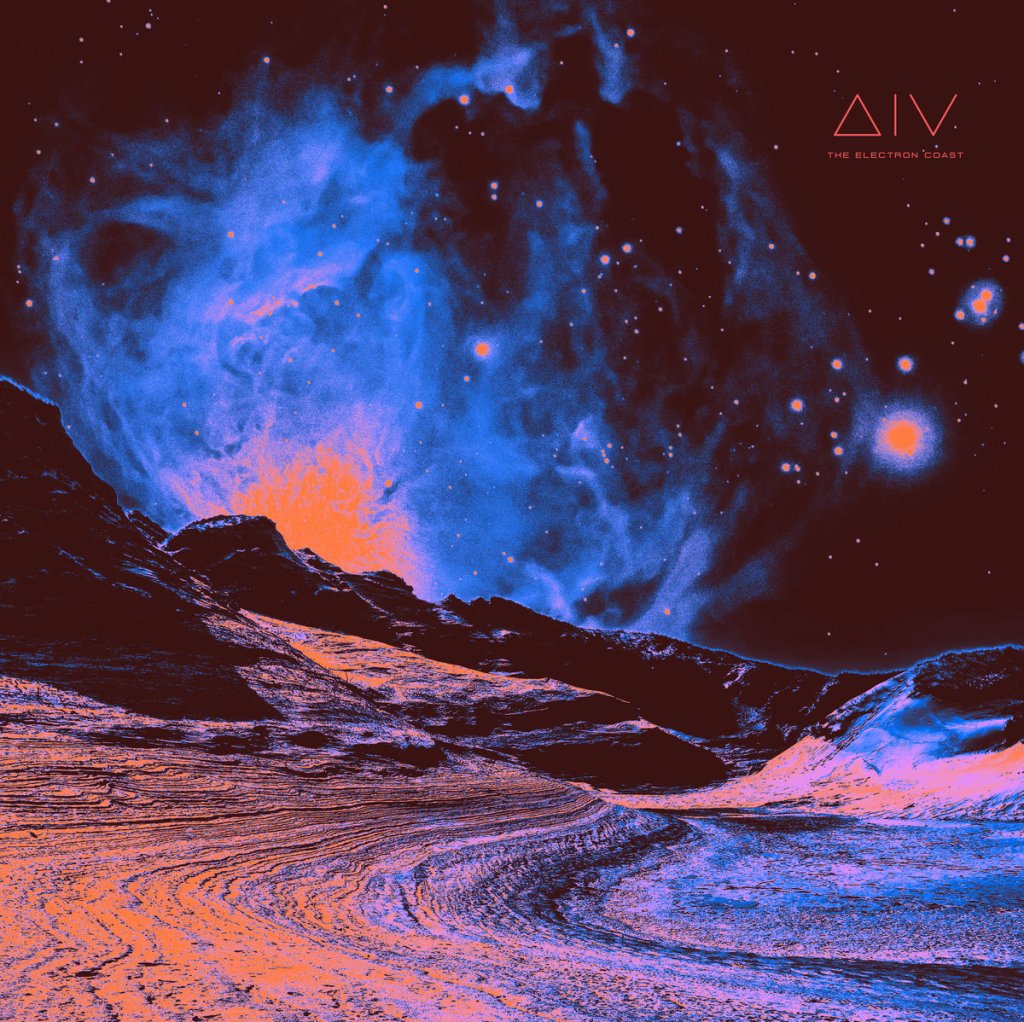
Delta IV is the prog/synth duo of Michael Schorr(drums, synths, cymbals) and Jared Pace(synths). While locking into Zombi vibes, this Seattle duo seem to have found their very own unique corner of the proggy, electronic musical world. With their previous album II there were touches of a more rock foundation(think Detroit’s Voyag3r) as Pace also played guitar as well. But with their brand new SFI Recording release The Electron Coast the guitar has been put in its case and this is an all synth/drum trip.
The band ebbs and flows from chromed-out cosmic desolation to more ethereal, existential sound journeys with a heavy cinematic lean. Delta IV paint landscapes in sound; emotional heft in sonic manipulation. Their music is ripe for contemplation and getting lost for a bit, while also hard-driving enough for pedal to the metal desert highway cruising.
I got to sit down and talk with Michael and Jared about Delta IV; from their influences to how the band came to be to how they connected with SFI Recording. Check it out below.
So give me a little background on Delta IV? How did the band come together?
Michael Schorr: Delta IV started as a math / post rock band that evolved out of casual basement jams with some other musicians. After the first album was released in August of 2019, we wanted to focus on a more compositional approach to creating music and move away from electric guitar and bass. At that point it was only myself and Jared and he suggested we start writing music in Ableton Live. We dove right in and then covid hit, which (for me at least) made it even easier to sit for hours at home writing songs in Ableton since we couldn’t do much else.
Jared Pace : Michael and I met at Capitol Hill Block Party through our mutual friends The Life and Times, who were playing the festival. We were hanging out in the VIP area and the band suggested Michael and I hang out and write some music together. I was primarily a guitar & synth player but the group Michael was jamming with needed a bass player, so bought a Fender Mustang bass and started driving down to Burien and did my best to lay down some Hot Snakes, Drive Like Jehu, Unwound vibes. Eventually it didn’t work out with the other band members, so we started writing music together via Ableton, and this gave us a chance to think about composition more broadly. Michael and I connected immediately channeling darker, more monolithic, apocalyptic sounds. We’d hop on a video call at least once a week, talk about the songs we were working on and spent a good amount of time also talking about bands & albums we liked. Through these calls we were able to share inspirations and our musical DNA with each other. We both learned a lot about each other through these calls.
So once it was just the two of you it seems things really got rolling?
Michael Schorr: Looking back it’s clear to me that II was us finding a common ground in our process while The Electron Coast found us solidifying our voice.

Speaking of The Electron Coast, let’s talk about the band’s newest release. How do you see it differs from II? And maybe you could talk a little about “Giants Walk Here”, mainly as I feel it stands out from the rest of the record and I really like it.
Michael Schorr: After II, Jared and I made this songwriting pact and said we were going to incorporate more of our dub influences into the new record. “Giants Walk Here” is maybe the most direct result of that agreement, but I think the whole album really reflects that mentality. The compositions on II centered more around the synth lead as the pulse but The Electron Coast really focuses more on the basslines as the core for each song. Erik Blood played a huge role in the feel of the album too; his mixes really added another dimension to those songs. When we listened to the first round of mixes from him we were blown away with his choices. In a way he was like a third member of the band with the influence he had on the sound. The Electron Coast also feels like a less constrained album to me than II. I think we were willing to take more risks with it than on II, partially because we simply have more confidence now and better understand the voice of Delta IV.
Jared Pace: With II, we tended to write more aggressive music with intentionally-torn edges. There were times I think we wanted to rip the ears of the listener to evoke that dystopian, burned-out landscape vibe. I love “II” so much for those reasons. With TEC, we channeled those emotions more directly into the bass and added a wider universe of sounds to surround the listener and evoke a more expansive sense of place. We aren’t afraid of unusual instruments, tones, and timbre and in TEC we felt more confident with ourselves, our instruments, and our workflow to shake loose any self-consciousness and really come into our own. Even though we have our “primary” instruments, with TEC those lines became increasingly blurred to the point where I can’t always remember who came up with the seed idea for which part. We collaborate so closely that it would be impossible to tell, and TBH neither of us care. We stay focused on the outcome and love building on each other’s ideas. There were two things we did want to do with TEC, and that was have songs that blended together and do a locked-groove which we did with the vinyl. Just some fun stuff we enjoy.

Tell me about some of the band’s influences, both as a band and individually? What’s helped shape the sound of Delta IV?
Michael Schorr: Massive Attack, Boards of Canada, Aphex Twin, and early DJ Shadow are huge influences for both of us. More obliquely I think Battles, Tortoise, The Bug, Steve Roach, and even Meshuggah come into play for me. But it’s hard to pin down influences, I’m a voracious listener and I find inspiration in nearly everything I hear. I listened to David Bowie’s “Lazarus” for the first time in a while the other day and was blown away. I was hearing it differently than before because I’m approaching it with a compositional mindset now. I’m also an avid science fiction and astronomy fan, so cornerstones like The Three Body Problem, Blade Runner 2049, and the James Webb Space Telescope have subtle (and not so subtle) influences on Delta IV.
Jared Pace: Musically, Michael and I have a lot in common but also a good amount of differences too. Michael nailed it with the bands he mentioned, and I would simply add that for me, I would simply not be the same without Bjork. Before and after first hearing “Army of Me” is clear to me, and I went into a deep obsession with anything in Bjork’s circle (Tricky, Sigur Ros, Zeena Parkins, John Born, Matthew Herbert, etc.). Especially Homogenic – that album messed me up in the best way possible. Also, Portishead, The Soft Moon, Leonard Cohen, Brian Eno, The Refused, Squarepusher, Nine Inch Nails, Unwound, Kae Tempest, Arca, Moloko, To Rocco Rot, Air, are huge influences. Visually, I’ve always been drawn towards darker themes. Movies like The Quatsi Trilogy, anything by Chris Marker (particularly Sans Soliel), John Luc Goddard, Alien, 2001, Blade Runner, Chinatown, Ghost in the Shell, Fire In The Sky, Akira, Strange Days, Apocalypse Now, X-Files, Hackers. I’m really enjoying Foundation and Silo right now. Regarding technology, I’ve always been a lover of tech. I built computers as a teen, read 2600, and in my early twenties operated a pirate radio station in Tucson, AZ. Books: Heart of Darkness, Lawrence Durrel’s The Alexandria Quartet, and more recently Klara and The Sun. I’ve always loved outer space. I spent part of my childhood growing up in Sedona, which has low light pollution. I did a lot of hiking and backpacking back then and have many memories of looking up at a sea of stars above me and using my telescope to look at planets on cooler nights. There was also (and still is) an interesting, eerie, mysterious alien/government conspiracy element in Sedona. I’ve heard a lot of very weird stories, and once even saw one of the infamous dead-quiet black helicopters fly directly above me. I suppose some of that seeped into my consciousness!
Maybe you two could tell me about the writing process for Delta IV?
Michael Schorr: We have a shared Dropbox folder which contains all of our work. We both have identical Ableton Live setups in our homes, which facilitates easy sharing as well. Usually one of us comes up with the seed of a song and then we pass it back and forth until it feels done. I love this approach and we are constantly riffing off of each other’s ideas, which pushes each song into new territory. We compose everything (including drums) in Ableton – it’s easier to edit, iterate, change tempo, etc. I’ve also found that writing drums in Ableton forces me to think differently which often results in more creative drum arrangements. After we have a set of songs that are done, I rehearse for a month or two and then record acoustic drums at a local studio.
Jared Pace: We tend to take intentional breaks from songs so we can listen to them with fresh ears and take more of the listener’s view. After we feel a song is just about finished, Michael will rehearse live drums to it, which gives us a different perspective of the overall flow of the song and helps to make any necessary tweaks to make it feel very locked-in.
The Electron Coast is getting the vinyl treatment and your previous album II was reissued on cassette, both being released by Andrew Crawshaw at SFI Recording. How did Delta IV get connected with SFI?
Michael Schorr: After The Electron Coast was finished, we asked Erik Blood (who mixed the record) if he knew a label that might be interested in our sound and approach. He suggested SFI and introduced us to Andrew. I visited Andrew at the SFI Recordings space soon after that and we hit it off right away. We feel very fortunate to have connected with SFI Recordings. The industry is tricky these days and many labels are understandably hesitant to invest in a non-touring band that focuses solely on recording.
Can you both tell me two albums that completely rewired your brains early on. Records that without you discovering them may have completely reshaped the way you approach music as a musician?
Michael Schorr: Rush – Grace Under Pressure was a pivotal record for me. I first heard that album on a Walkman in my high school geometry class and it was the most alien thing I’d heard at the time. It was oddly melancholic at times, with great atmospheric moments, but had this wonderful pulse. Neil Peart in particular has been a huge influence on my musical journey and I’ve always loved his ability to look at rhythm sideways. A few years later, I heard Depeche Mode – Music for the Masses. That album had this amazing dreamlike atmosphere and was sexy in a way that I related to. It was a vulnerable, intimate record at times but also had this unique swagger about it that I’d never heard before, especially with synths. Depeche Mode really taught me a lot about how melody can revolve around a pulse in creative ways.
Jared Pace: I mentioned Bjork’s Post and Homogenic. Aphex Twin – Richard D. James album, Stereolab – Dots and Loops, Nine Inch Nails – The Downward Spiral, John Frusciante – Niandra La Des And Usually Just A T-Shirt.
Being strictly a studio project, what would you imagine a live Delta IV show to be like? If you two could ever bring the to a live setting.
Michael Schorr: It would probably be something where Jared is triggering stems and playing leads while I play drums, but we really haven’t given it that much thought. It would be a logistical puzzle to solve as well, since Jared is based in LA and I’m in Seattle. My wife keeps pressing me to play live, so I think at some point it will happen.
Jared Pace: In my imagination, I picture a lot of fog, dramatic lights, maybe some space imagery or glitched-out/techy visuals… and of course we are loud as hell! Shaking chests and making the whole room shake. That would make me super happy.
What’s the electronic/synth scene like in Seattle these days? SFI is building quite the music collective.
Michael Schorr: A few bands in the electronic/synth space come to mind that have intrigued me live. Along with the bands you mentioned, Mnemonic Pulse (Portland), Darkswoon (Portland), and Noise-A-Tron (Seattle) are all fantastic bands from the area. There is a robust goth/industrial scene here too, which overlaps in fun and interesting ways. I feel like SFI just keeps releasing great music and in doing so Andrew is helping to connect synth-minded folks from all around — in that way he’s definitely ground zero! That Timothy Fife album has been on constant rotation for me, as has the New Frontiers album. Those bands have influenced some of the new Delta IV compositions and I attribute that to being connected to Andrew and SFI.
Jared Pace: I’m living in LA now, so can’t speak to this too well. That said, we would love to do some sync or soundtrack work. I’m excited to see a lot of Sci-Fi being made these days and our music is a great fit for the screen.
So what’s next for Delta IV? What does the rest of 2023 look like?
Michael Schorr: We want to continue connecting people with The Electron Coast, so we’ll be working on ways to get the word out. The demos for the next Delta IV album are mostly finished (Im listening to them right now!) and I’ve started rehearsing the drum parts. I’ll likely record drums in the fall and if things go really well that material might even be mixed this year, depending on everyone’s schedules. The goal is to release a full length album sometime in 2024.
The Electron Coast is out now via SFI Recording. Buy it here.
Discover more from Complex Distractions
Subscribe to get the latest posts sent to your email.

